· 2 minute read
Remembrance in Jet and Hair: Victorian Mourning Jewelry
After Prince Albert died in 1861, Queen Victoria's long mourning helped shape a whole category of jewelry. What these pieces are, what they were made from, and how to read them.
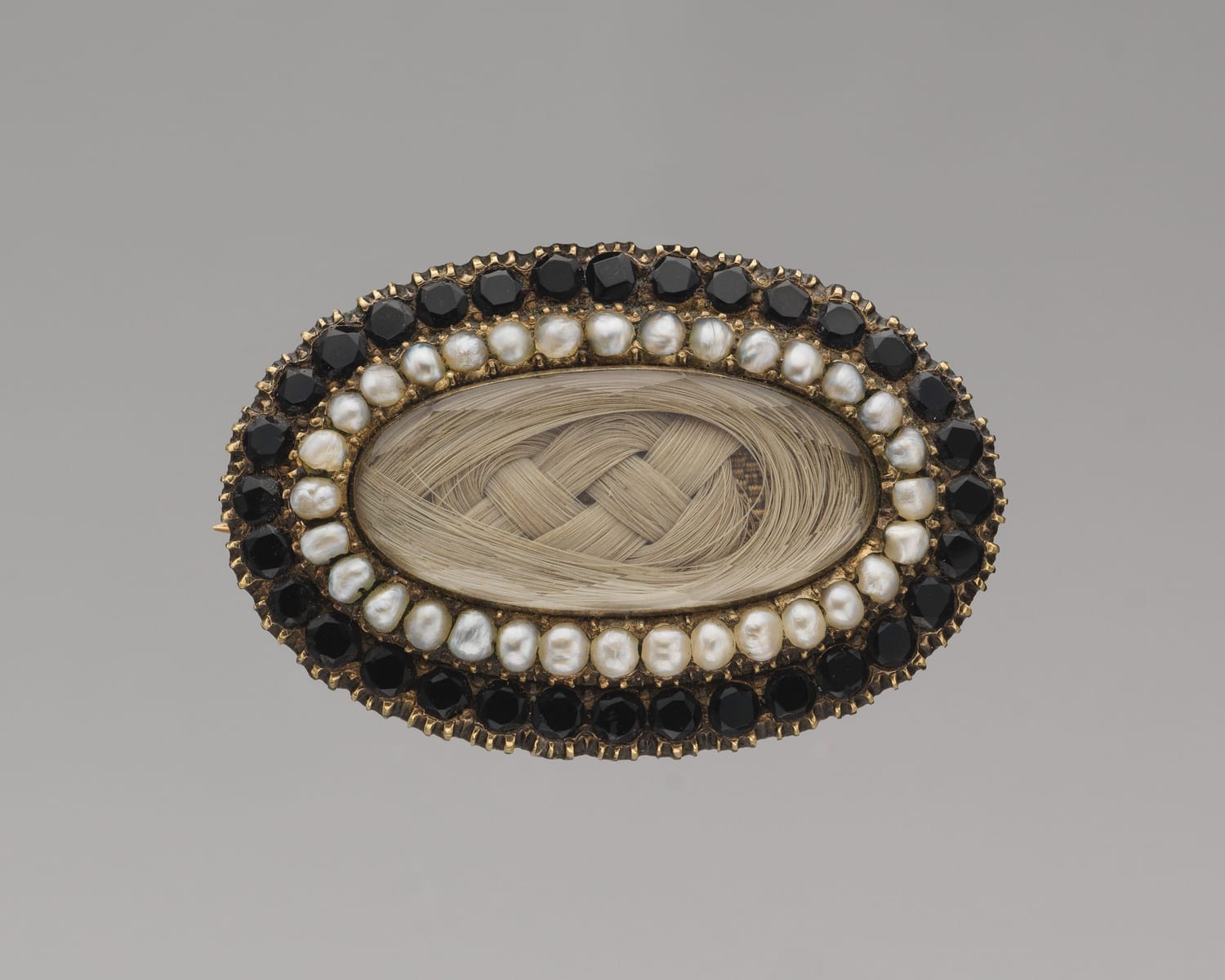
Few antique pieces are as personal as mourning jewelry. Rings, brooches, and lockets made to remember someone who had died were worn in Britain and America for centuries, but they reached a particular height in the Victorian period.
What is documented
Prince Albert, Queen Victoria's husband, died in December 1861. The Queen wore mourning for the rest of her life, and the conventions of mourning dress, including jewelry, were widely followed by others in the decades after.
Jet from Whitby on the Yorkshire coast was especially popular for mourning jewelry. Whitby jet is a fossilized wood that can be carved and polished to a deep black. Because demand was high, cheaper black materials were also used, including vulcanite (a hardened rubber) and black glass, often sold as "French jet".
Many mourning pieces include human hair, either kept behind glass in a locket or brooch, or woven into intricate patterns. Inscriptions such as "In memory of" followed by a name and a date are common.
Interpretation, and its limits
An inscription can tell us who was remembered and when they died, but not always who wore the piece or why. Hair in a piece is not proof of whose hair it is. Unless an inscription or record links a piece to a person, any story about its owner is speculation, and we label it that way.
Telling the materials apart
Jet, vulcanite, and black glass can look alike. Jet is light and warm to the touch; glass is colder and heavier; vulcanite can fade to brown over time. Specialist testing may be needed, and we describe the material only as far as we can confirm it.
Collecting today
Mourning jewelry is collected for its craftsmanship and for the window it opens onto how people remembered one another. We treat these pieces with the care their purpose deserves.