· 2 minute read
Paintings in Stone: The Art of Pietre Dure
Skies of agate, trees of jasper, water from the natural veins of a stone: how craftsmen made pictures without a drop of paint, and how to look at a pietre dure panel today.
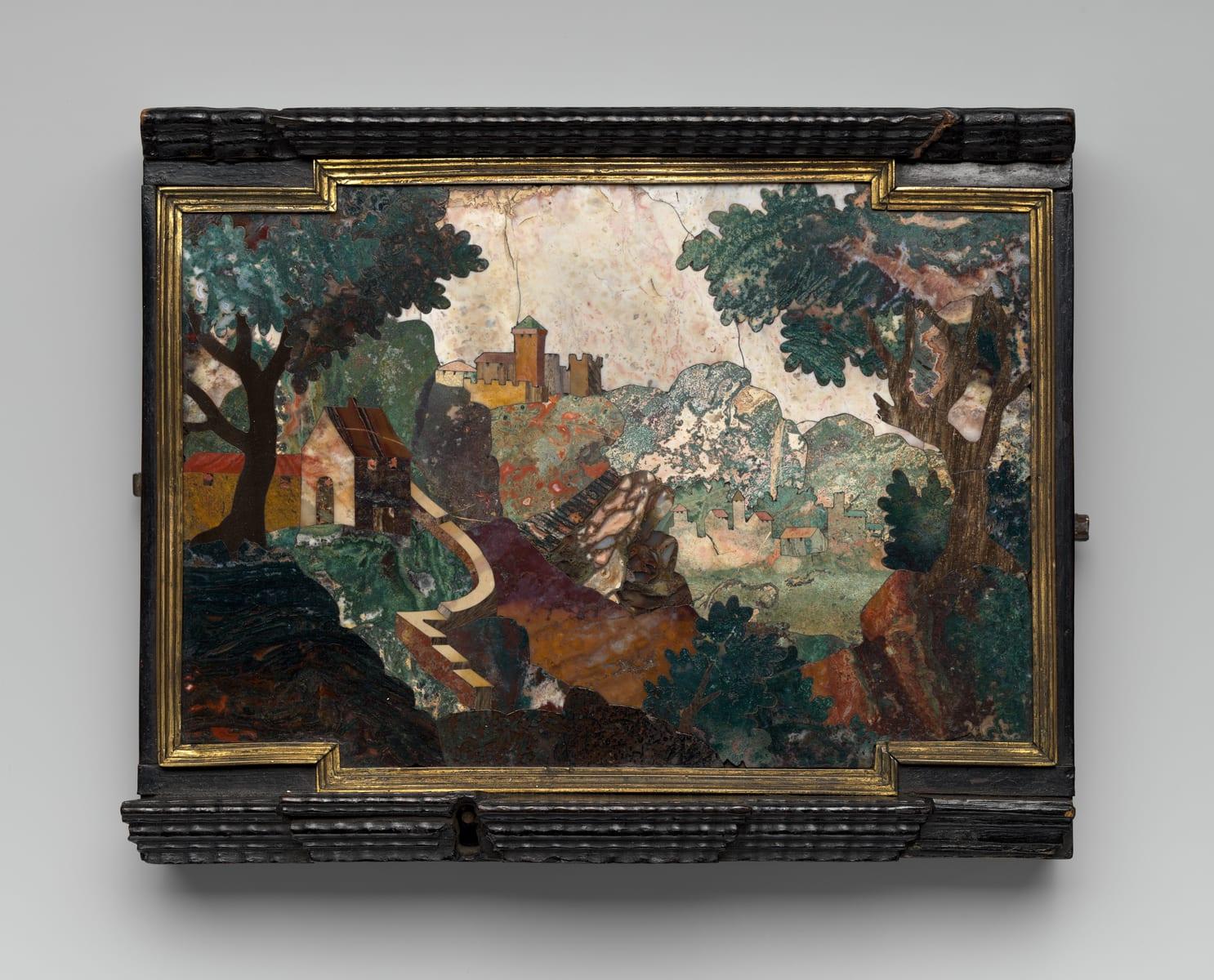
From a few steps away it looks like a small painting: a castle on a hill, trees, a winding road, a pale sky. Come closer and there is no paint at all. Every color is a slice of stone.
What pietre dure is
Pietre dure is Italian for "hard stones". In this technique, stones such as agate, jasper, and chalcedony are sawn into thin slices, shaped, and fitted together so closely that the joins almost disappear. The craftsman does not color anything. He chooses each stone for its natural color and veining, so that a band of agate becomes a stretch of water, or a mottled jasper becomes the foliage of a tree.
What is documented
The panel shown here is in The Metropolitan Museum of Art. The museum catalogues it as a pietre dure landscape scene of the 17th century, associated with the Castrucci family of stone-cutters, made of agate, jasper, and other hard stones and set in ebony, and measuring 18.1 by 22.5 cm.
Workshops for this kind of work flourished in Florence under the Medici grand dukes, who founded a court workshop in 1588. Around 1600, members of the Castrucci family worked in Prague for the court of Emperor Rudolf II, where landscapes of this kind were a specialty.
A long afterlife
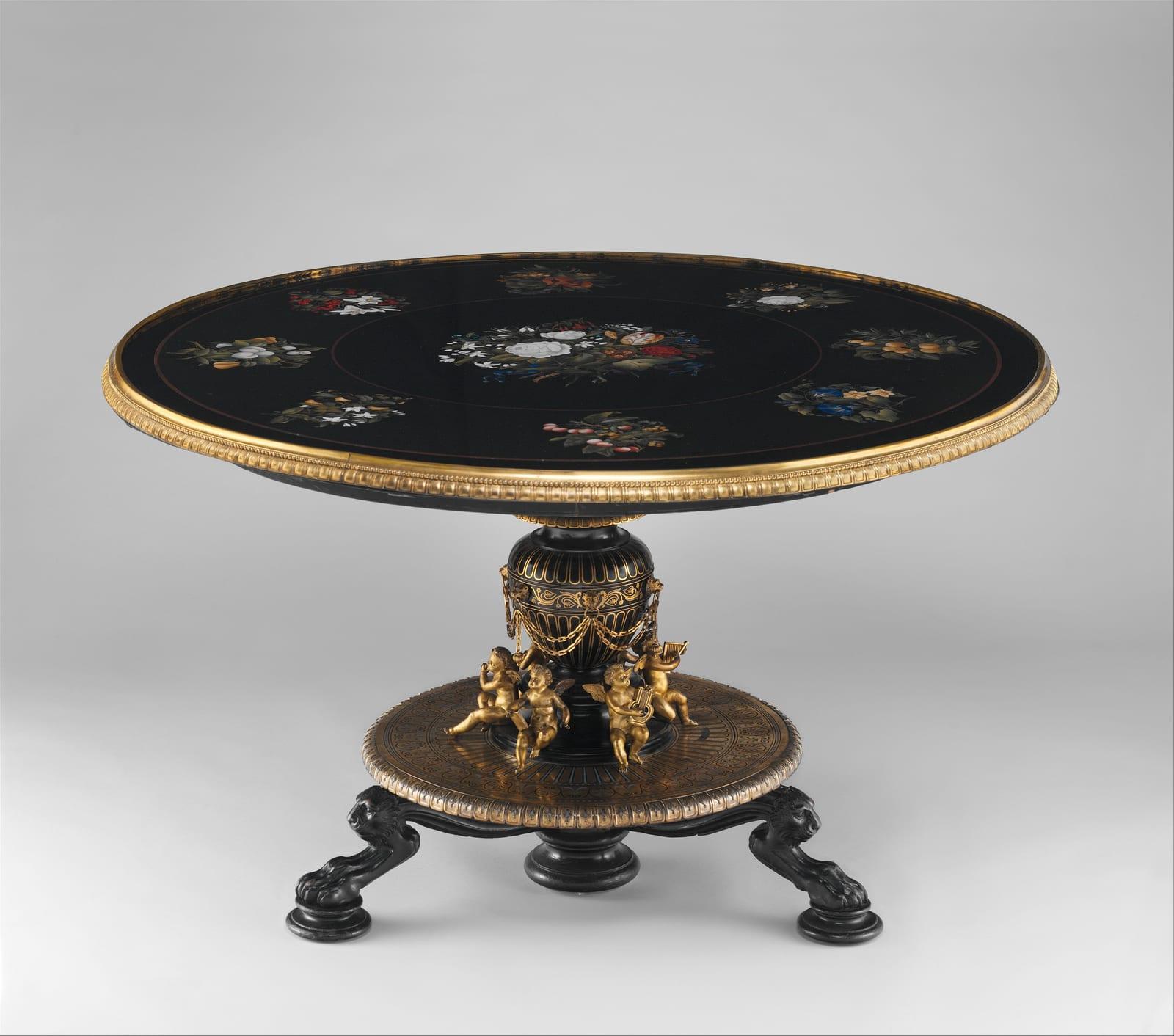
Pietre dure never really went out of fashion. In the 19th century, designers used it again for grand furniture. The Met's round table below, designed by the architect Theophil Hansen around 1855 to 1865, sets flowers of semi-precious stone into a top of black Belgian marble.
How to look at a pietre dure piece
- Follow the veins. In good work, the natural pattern of each stone does the drawing: clouds, ripples, bark.
- Look for cracks and replacements. Stone panels can crack across, and lost pieces are sometimes replaced with later stone or even painted filler. A raking light shows differences in surface and polish.
- Consider the setting. Panels were often reset into cabinets, tables, or frames made later than the stonework itself. A cabinet and its panels may not be the same age, and a careful description says so.
The objects shown here are in the collection of The Metropolitan Museum of Art and are shown for their story; they are not for sale.