· 2 minute read
Cats in Art: From Ancient Egypt to Edo Japan
Bronze cats made as offerings more than two and a half thousand years ago, and a ghostly cat on a Japanese woodblock print: a short history of one of art's most enduring companions.
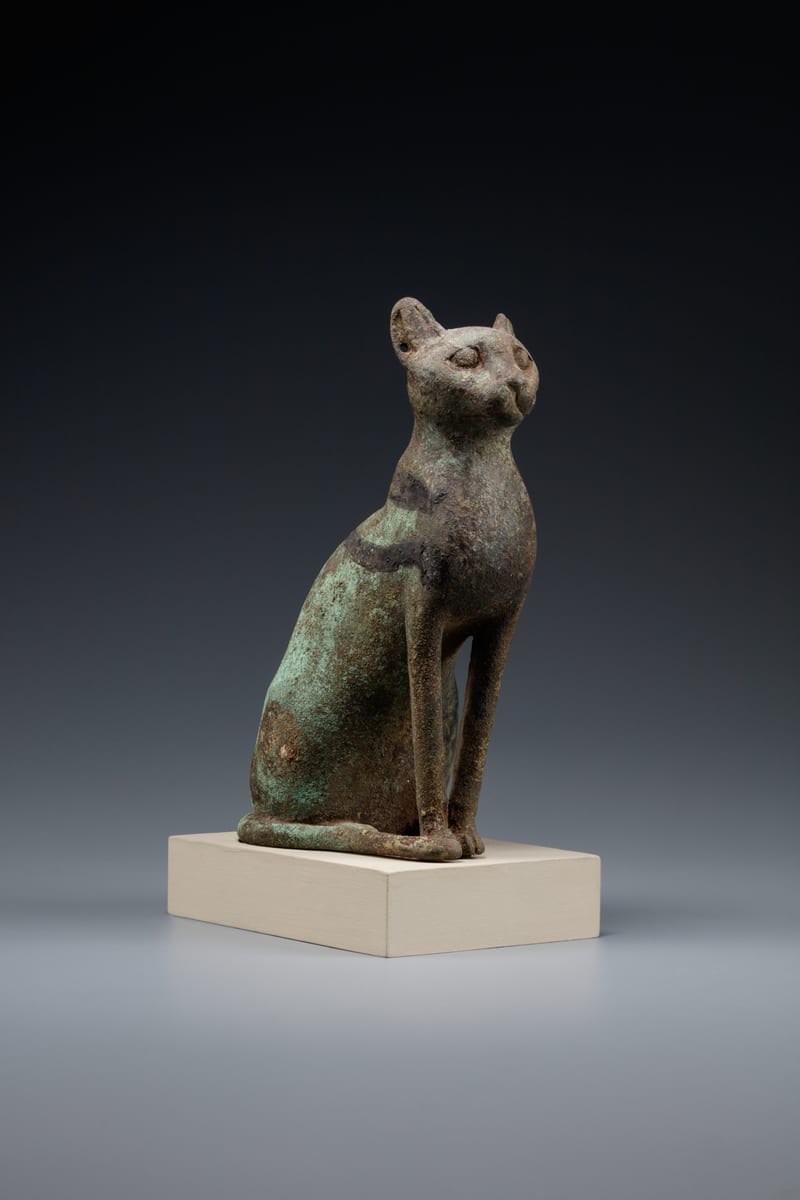
Few animals have kept artists company for as long as the cat. Sleek, watchful, a little mysterious, cats have been cast in bronze, painted on silk, printed on paper, and set in gold and diamonds. Here are three of their ancestors, from The Metropolitan Museum of Art.
Ancient Egypt: the cat as offering
In ancient Egypt, the cat was closely linked with the goddess Bastet. Bronze figures of seated cats were made in large numbers and dedicated at temples as offerings.
The cat at the top of this story is one of them. The Met dates it to 664 to 525 BCE and records it as bronze, 16.5 cm high. It sits upright, tail curled around its feet, ears alert: the same pose Egyptian craftsmen returned to again and again.
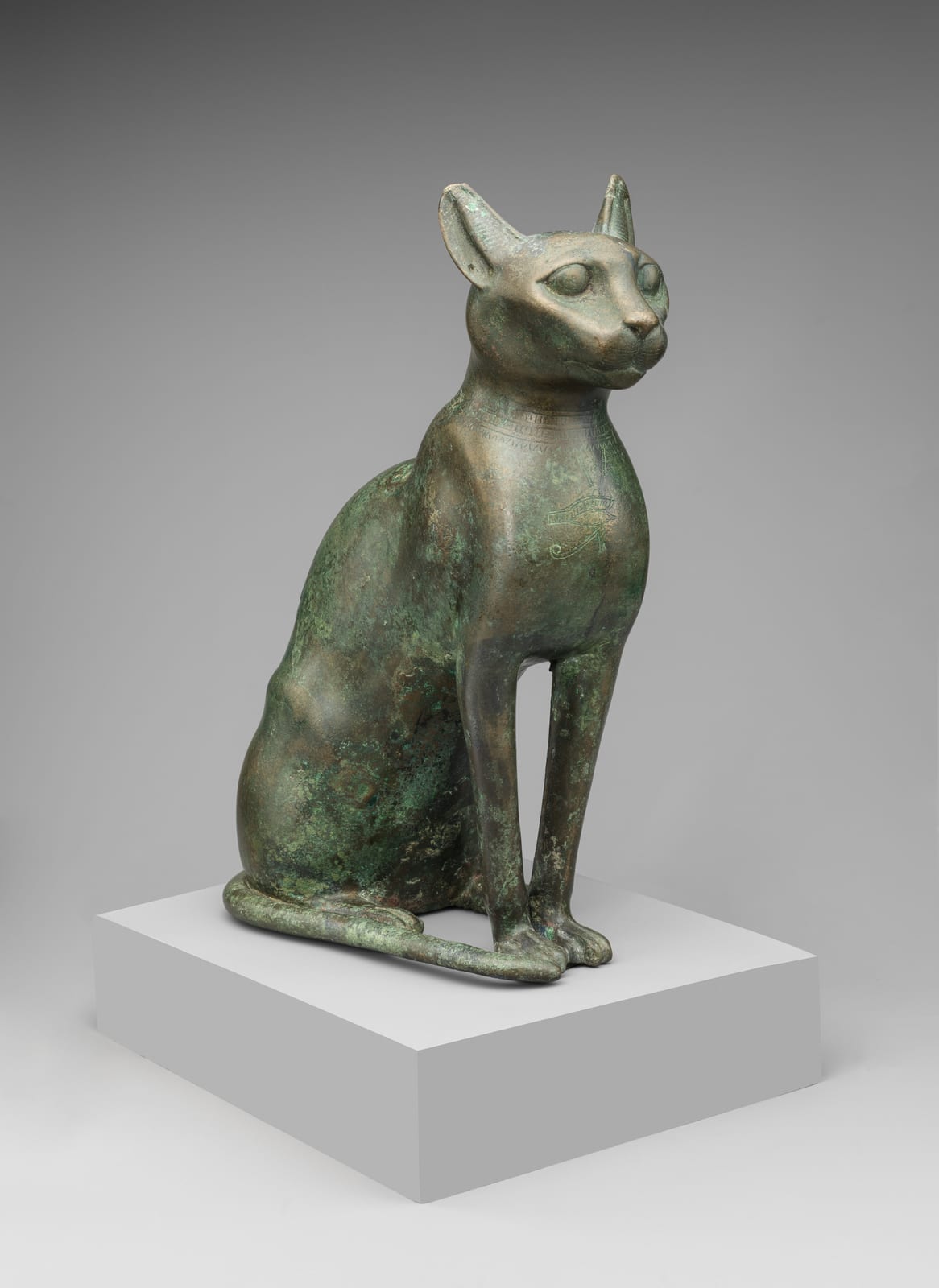
Some of these figures had a second purpose. The Met catalogues this larger cat, made between 332 and 30 BCE in leaded bronze and weighing 2.5 kg, as a statuette intended to contain a mummified cat. Its hollow body was a container as well as a sculpture.
Japan: the cat as legend
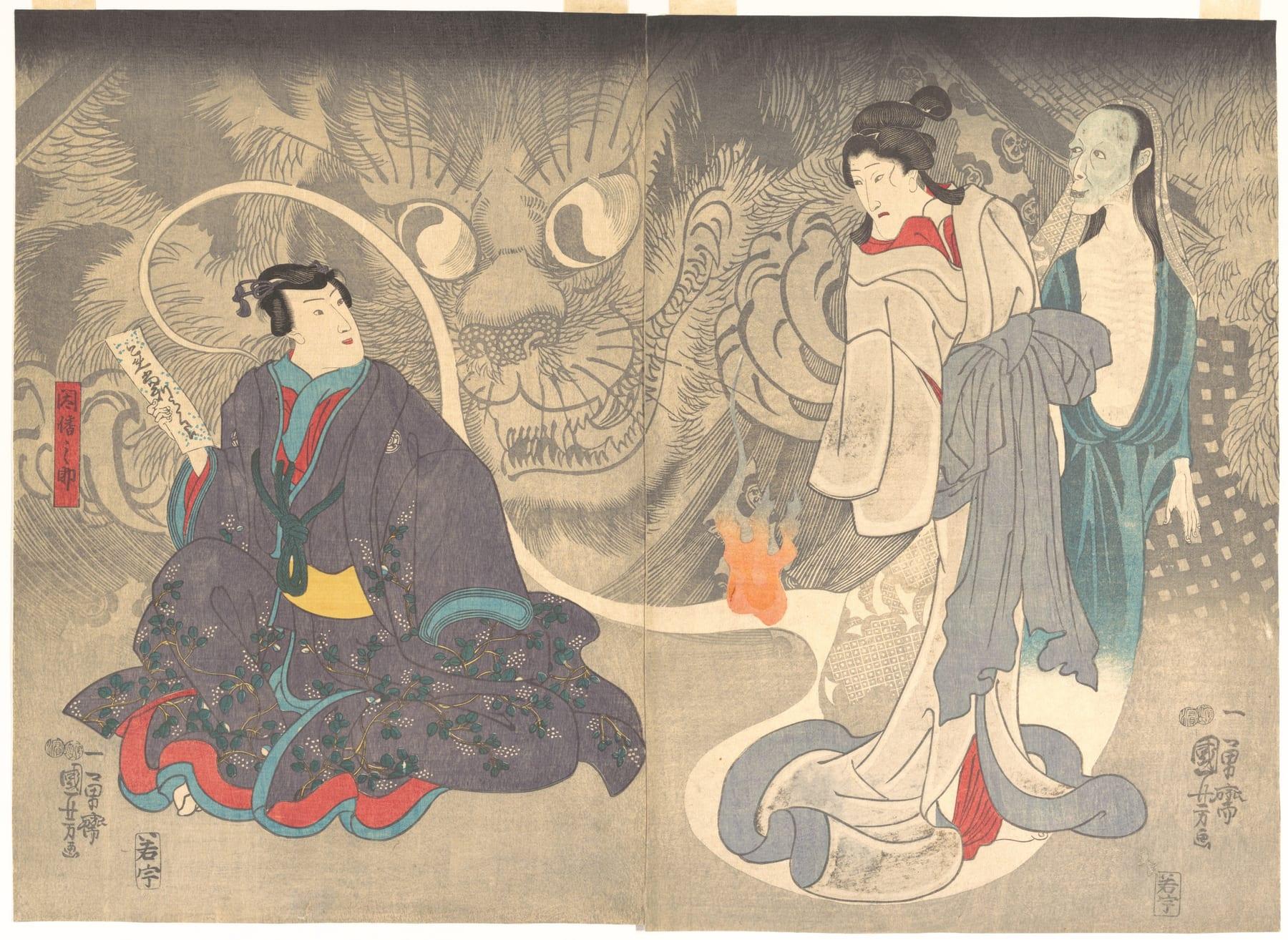
More than two thousand years later and half a world away, the printmaker Utagawa Kuniyoshi made cats one of his favorite subjects. In this woodblock diptych of about 1850, now at The Met, he shows a scene from a ghost story: the cat demon of Okazaki, a post town on the great Tōkaidō road. The monstrous cat rises behind the figures like smoke.
Interpretation, and its limits
It is tempting to give every ancient cat a personal story: a beloved pet, a grieving owner. The objects themselves rarely tell us that. What they record is a pose, a material, a date range, and sometimes a purpose. The rest is imagination, and we label it that way.
For the collector
- Egyptian cats are among the most reproduced antiquities. Genuine ancient pieces need documented ownership history and are subject to strict import and export laws.
- Japanese prints were often reissued. Later printings, recut blocks, and modern reproductions exist; paper, color, and publisher's seals all help tell them apart.
- Cats run through jewelry too. From Victorian brooches to 20th-century pieces set with gemstones, cat jewelry is a rich field of its own.
The objects shown here are in the collection of The Metropolitan Museum of Art and are shown for their stories; they are not for sale.