· 2 minute read
The Magnolia Vase: Tiffany's Showpiece of 1893
Silver, gold, enamel, and opals, almost eighty centimeters tall: how one vase made in New York for the Chicago World's Fair shows what American silver could do, and what its marks and materials can teach a collector.
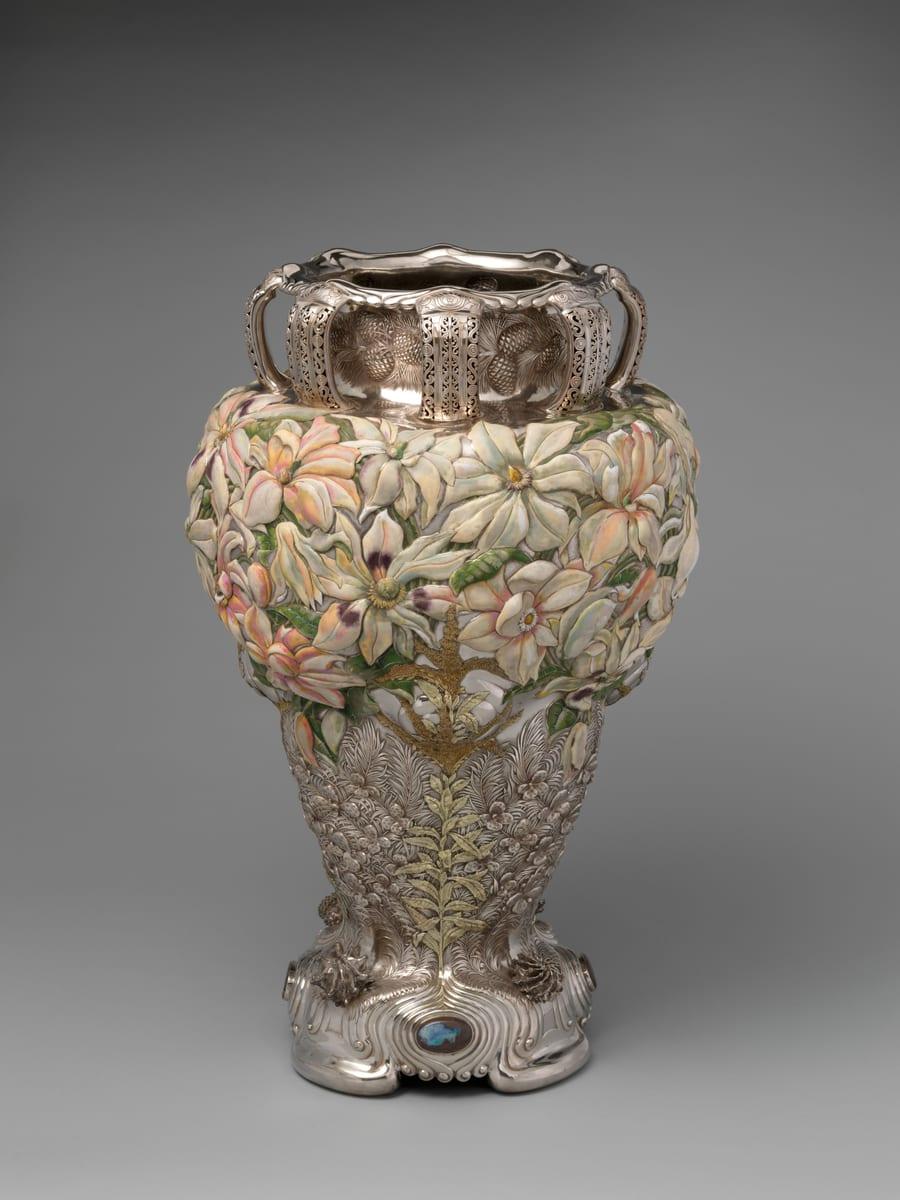
Some objects are made to be used. Others are made to astonish. The Magnolia Vase belongs firmly to the second group.
What is documented
The vase was made by Tiffany & Co. in New York in 1893, for the World's Columbian Exposition held in Chicago that year. It is worked in silver, with enamel, gold, and opals, and stands 78.4 cm (30 7/8 in.) high. It entered The Metropolitan Museum of Art in 1899 as the gift of Mrs. Winthrop Atwill, and it is still there today.
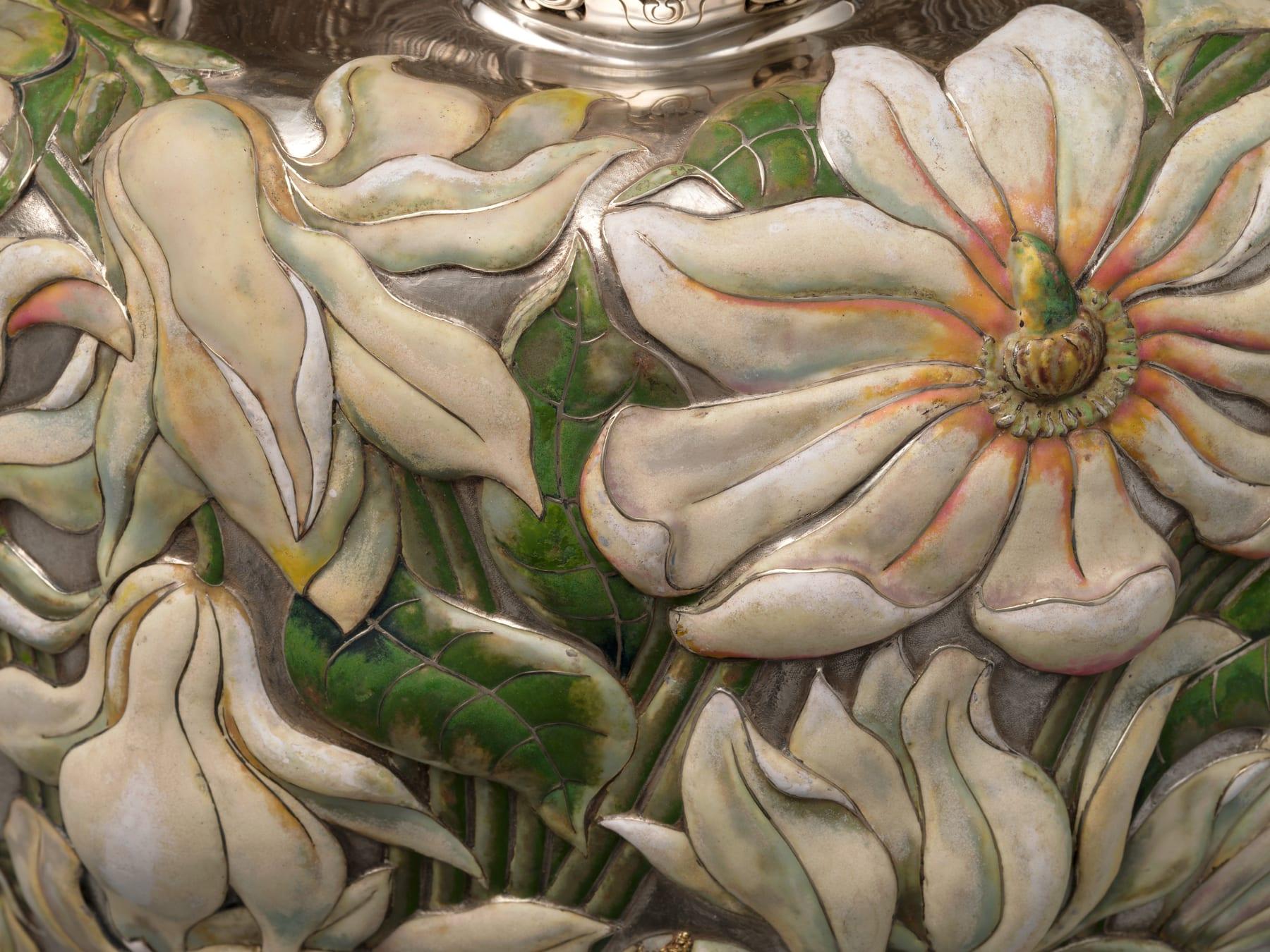
Around its swelling body, magnolia blossoms are modeled in relief and colored with enamel, so that the petals seem to curl away from the silver. Below them, sprays of goldenrod are picked out in gold, and pine needles and cones wind around the neck and base. Opals are set into the foot.
Marks that tell the story
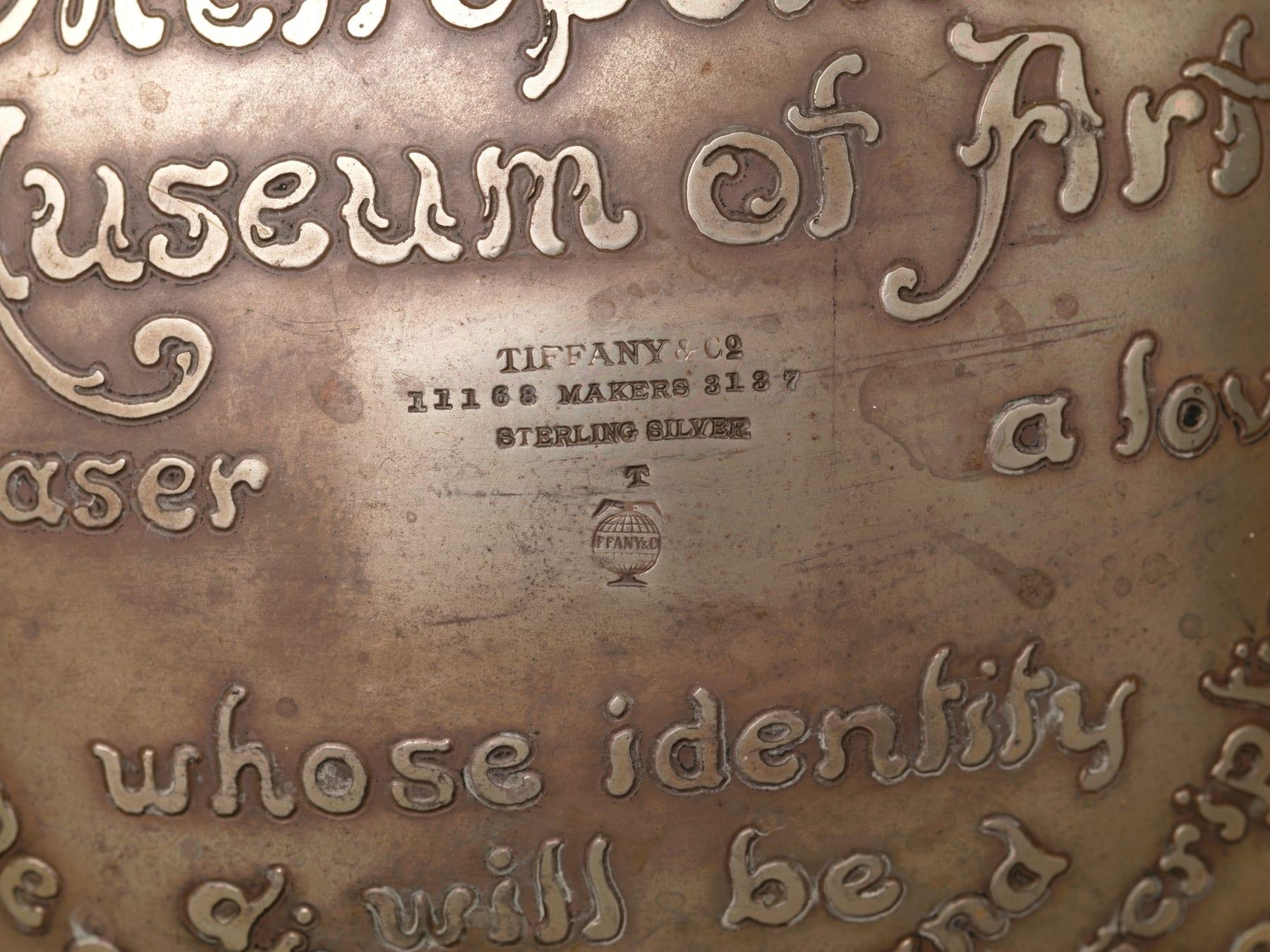
Turn the vase over and the silver itself speaks. Stamped marks name the maker, Tiffany & Co., and the standard, sterling silver, with workshop numbers alongside. The same habit of marking that we follow in British hallmarks ran through American silver of the period, and it is often the first thing we look for.
From drawing to silver
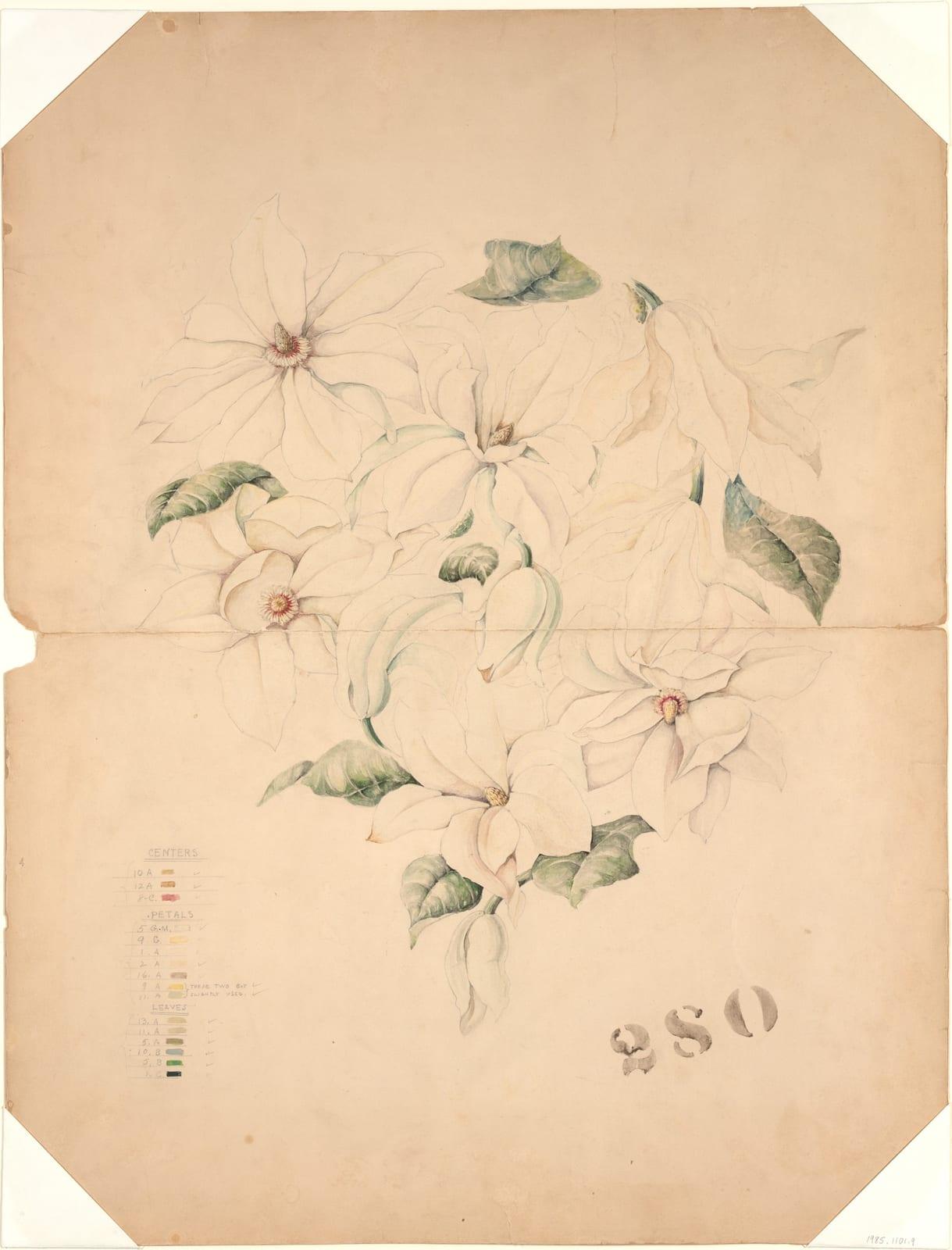
Tiffany's design drawing for the vase survives too, in watercolor and graphite on board, and was given to The Met by Tiffany & Co. in 1985. Drawings like this are a reminder that great silver began as a picture on paper, revised and annotated before a single sheet of metal was raised.
Interpretation, and its limits
The plants on the vase are North American, and many writers read the whole design as a celebration of the American landscape at a fair that set out to show the nation's achievements to the world. That reading is persuasive, but it is an interpretation of the design, not a statement the makers left behind.
What collectors can take from it
- Look for the marks. On silver, the maker's mark and standard mark are the beginning of any description.
- Check enamel closely. Enamel on silver can chip or craze; small losses and later touch-ups should always be described.
- Weigh the decoration. Applied and cast ornament, set stones, and gilding all add to the value, and all need careful looking for repairs.
The Magnolia Vase is in the collection of The Metropolitan Museum of Art and is shown here for its story; it is not for sale.