· 2 minute read
Reading a British Hallmark
A few small stamps on English silver can record who made it, how pure it is, where it was tested, and often the year. Here is how to read them, and what they cannot tell you.
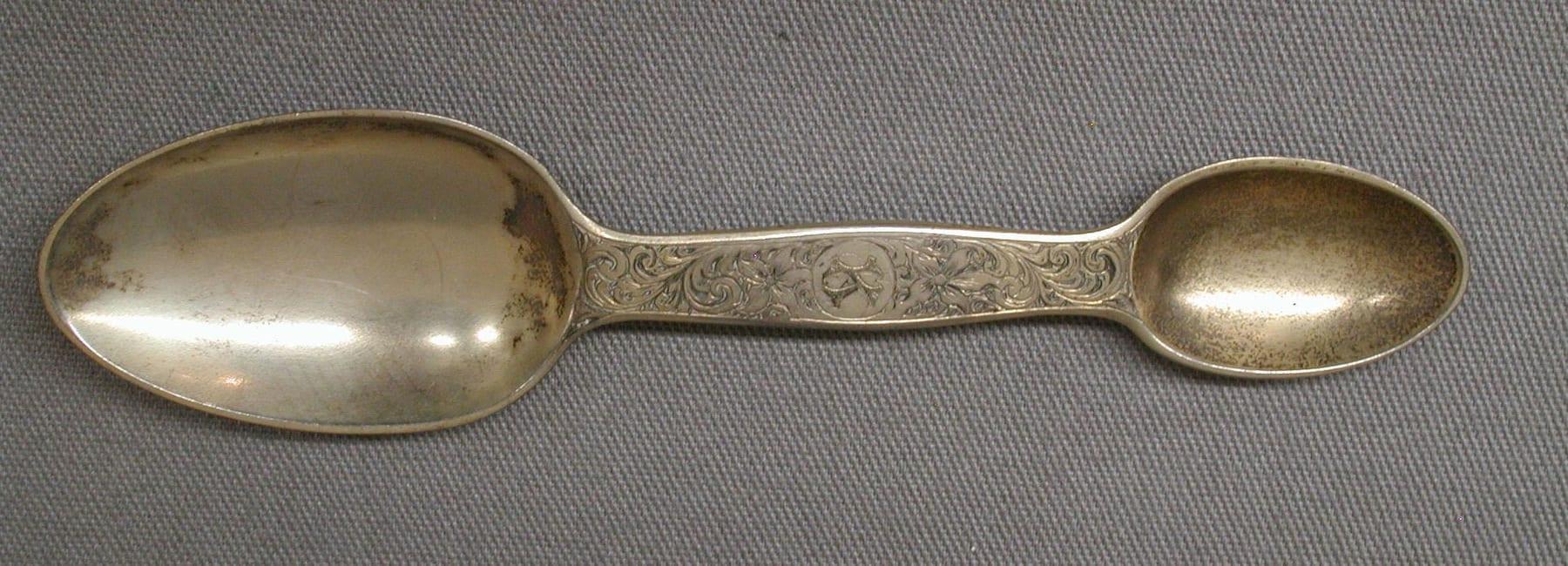
Turn over an English silver spoon, salt cellar, or vinaigrette and you will often find a short row of tiny stamps. Together they form one of the oldest systems of consumer protection in the world.
What is documented
Hallmarking in England dates to a statute of 1300 under Edward I, which required silver to meet a fixed standard before sale. The word itself comes from Goldsmiths' Hall in London, where pieces were brought to be tested, or assayed, and marked.
A traditional British hallmark is made of several marks:
- The sponsor's mark, often called the maker's mark: usually initials, identifying the maker or the firm that sent the piece for testing.
- The standard mark: for sterling silver (92.5% pure) made in England, a walking lion, known as the lion passant.
- The assay office mark: where the piece was tested. A leopard's head for London, an anchor for Birmingham, and a crown for Sheffield (replaced by a rose in 1975).
- The date letter: a letter that changed each year in a set style of alphabet and shield shape, which lets the year of assay be identified from published tables.
Between 1784 and 1890 a fifth mark, the sovereign's head, showed that a duty had been paid on the piece.
What a hallmark cannot tell you
A hallmark records when and where a piece was assayed, not who used it or what happened to it afterwards. Pieces were sometimes altered, repaired, or later decorated, and marks can be worn, partly erased, or transposed from another object by a forger. A clear, crisp mark on a piece that otherwise looks newer than its date letter is a reason for a closer look.
How we use hallmarks
When a piece in our collection is hallmarked, we photograph the marks and describe what each one indicates. If a mark is worn or we cannot read it with confidence, we say so rather than guess.
Further reading
The assay offices of the United Kingdom publish guides to their marks, and printed date-letter tables are widely available from silver reference books.